Which of the following is a common requirement for clinical hour verification across multiple certifying boards?
Select one answer.
Why clinical hour verification matters for your certification
If you're pursuing a healthcare certification, you already know that completing the required clinical hours is a major milestone. But what happens when the certifying board asks you to prove those hours? Verification isn't just a formality — it's a gatekeeping step that can delay or derail your application if you haven't kept proper records. This guide walks you through the documentation standards used by major boards and gives you a practical checklist to ensure your clinical hours are accepted the first time.
What certifying boards require for clinical hour documentation
Each credentialing body sets its own rules, but the core requirements are similar. You'll typically need to submit evidence of a minimum number of supervised, direct patient care hours within a specific time frame. For example, the American Board of Physical Therapy Specialties (ABPTS) requires applicants to submit evidence of 2,000 hours of direct patient care in the specialty area within the last 10 years, with at least 25% (500 hours) completed in the most recent three years source. The Texas Behavioral Health Executive Council requires licensed social workers (LMSW) seeking an LCSW to complete 3,000 hours of supervised professional clinical experience over at least 24 months, plus 100 hours of supervision source.
Who can verify your clinical hours?
Verification must come from a qualified supervisor or clinical educator who meets the certifying board's standards. For ARRT credentials, verifiers must work at the clinical site and confirm that you completed the required discipline-specific clinical activities and procedures source. ASHA requires that supervisors hold ASHA certification (CCC-A or CCC-SLP), have completed at least nine months of practice experience post-certification, and have earned at least two hours of professional development in supervision source.
Common documentation formats and what to track
Most boards require a combination of the following:
- Signed log sheets with date, time, patient encounter type, and supervisor signature
- Supervisor attestation forms that confirm the hours and quality of your clinical experience
- Official transcripts from your training program showing clinical placement hours
- Employer verification letters on letterhead, detailing your role, hours, and supervision
Keep a running log in a spreadsheet or dedicated app. Record each shift's start and end time, the type of procedures or patient interactions, and the name and credentials of your supervisor. This makes it easy to produce a verified summary when you apply.
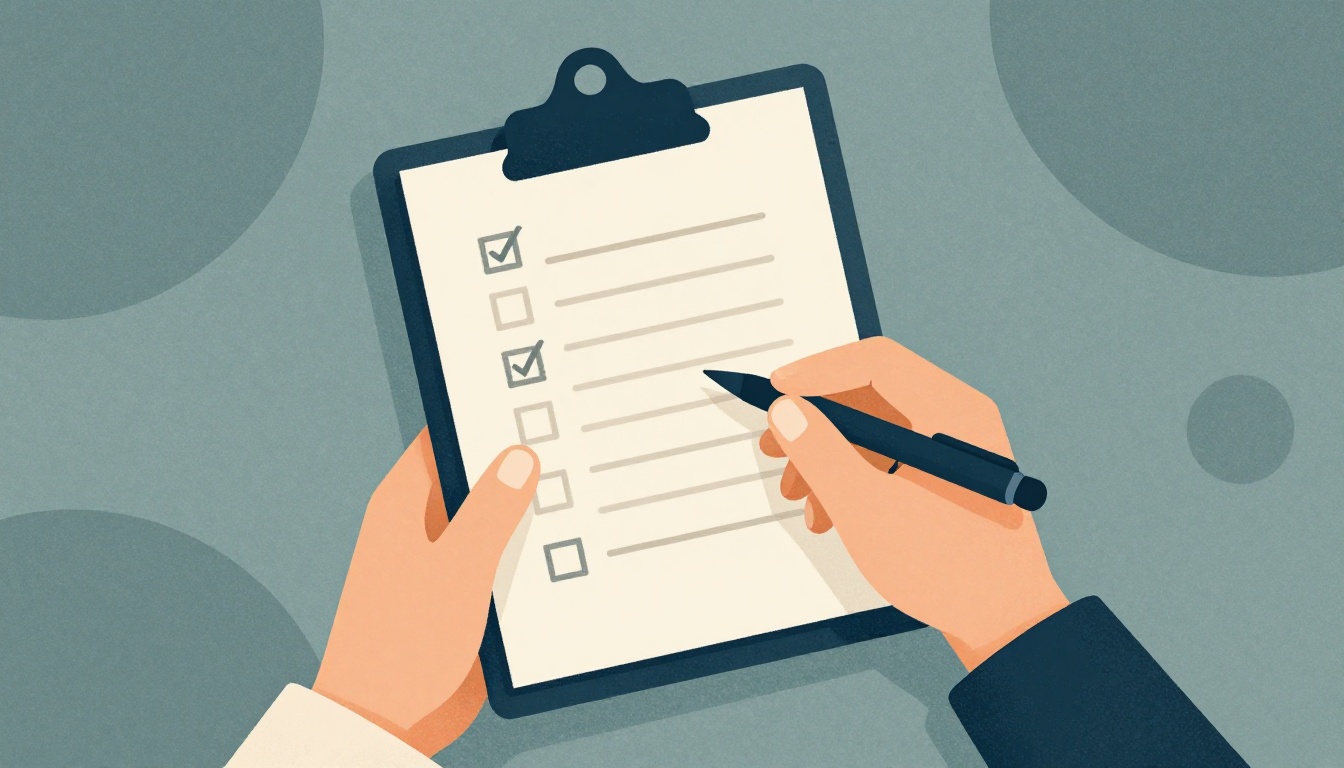
Actionable checklist to prepare your clinical hours for verification
- Review your certifying board's handbook — Find the exact hour requirements and documentation rules for your credential. Note any deadlines (e.g., hours must be within the last 10 years).
- Confirm your supervisor's eligibility — Ensure they meet the board's criteria (e.g., ASHA requires 9 months post-certification experience).
- Maintain a real-time log — Don't wait until application time. Log hours weekly and have your supervisor sign off monthly.
- Collect supporting documents — Save orientation checklists, skills competency forms, and any procedure logs your site provides.
- Request verification early — Ask your supervisor or clinical coordinator to complete the board's verification form at least 4–6 weeks before your application deadline.
- Double-check totals — Use a calculator to confirm your hours meet the minimum. Boards like ABPTS require 2,000 hours; Texas LCSW requires 3,000 hours.
- Keep copies of everything — Store signed logs, attestations, and correspondence in a secure folder (cloud + hard copy).
Common pitfalls that delay certification
- Missing supervisor credentials — Your supervisor must meet the board's standards at the time they supervised you, not just at verification.
- Incomplete logs — Missing dates, patient types, or supervisor signatures can invalidate hours.
- Miscalculated totals — Boards often exclude observation-only time, breaks, or non-clinical tasks. Know what counts as "direct patient care."
- Late requests — Supervisors may take weeks to respond. Plan ahead.
How the Featured Expert Can Help
The Technical Bridge Group offers specialized training and mentorship for healthcare and technical careers, with a strong focus on exam readiness and hands-on learning. Their programs help students transition from theory to practice and build confidence in clinical settings. Visit their website at https://www.thetechnicalbridgegroup.com to learn more about their personalized tutoring and corporate partnerships.
Quiz: Test your knowledge
Which of the following is a common requirement for clinical hour verification across multiple certifying boards?
- A) Hours must be completed within the last 5 years
- B) A qualified supervisor must attest to the hours
- C) Hours must be logged in a specific proprietary software
Correct answer: B